 PANTHEONOF DISCIPLINE
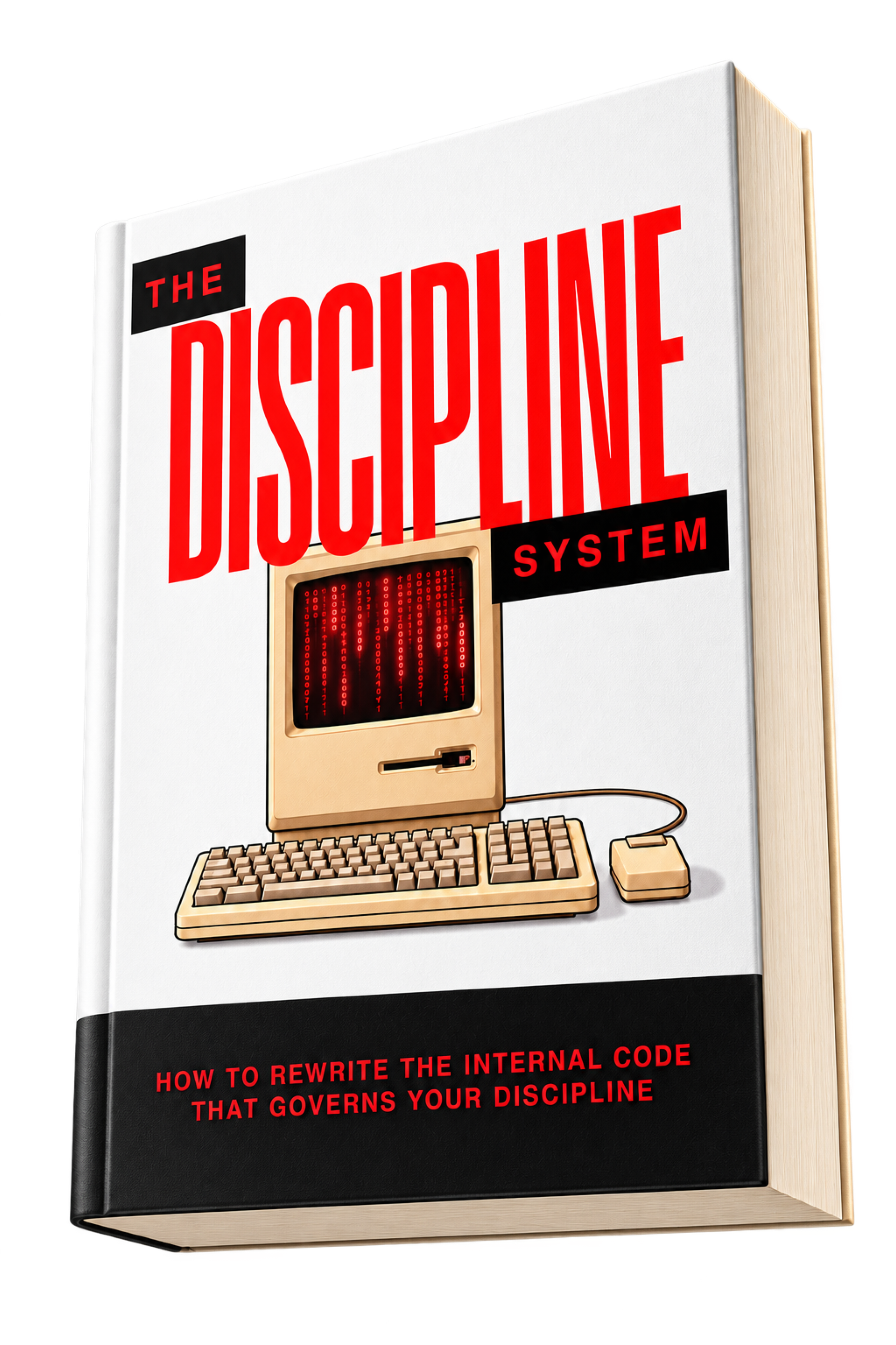
The DisciplineSystem
How to Rewrite the Internal Code That Governs Your Discipline
Exit the default program. Install your own.
Discipline supplies power, but power only amplifies the system already running. The Discipline System helps you expose inherited code, uninstall identities you never chose, and build an operating system aligned with your values.
The machine is
running.
But who wrote the code?
More discipline does not automatically create a better life. If the internal system is inherited, reactive, or misaligned, greater effort simply makes the wrong program run faster.
- Family and culture install invisible defaults.
- Attention loops train behavior before choice appears.
- Borrowed identities define success for you.
- Old code converts new effort into familiar outcomes.
If you do not design your system, you inherit one.
From execution
to authorship.
Expose the system
See the environments, incentives, and loops beneath repeated behavior.
Audit inherited code
Identify beliefs and definitions you absorbed without choosing.
Uninstall false identities
Remove approval-driven roles and performance-based self-worth.
Accept the cost
Define what strength, ownership, and updated standards require.
Install governing rules
Replace moods with clear rules, structure, and designed environments.
Build five libraries
Create practical modules for mind, body, soul, finances, and relationships.
Discipline is
code in motion.
Exposure
Observe the system through the results it repeatedly produces.
Uninstall
Remove borrowed identities and obsolete rules before building over them.
Terms & conditions
Choose the costs and standards required by the life you say you want.
Installation
Create rules and environments that make aligned action the default.
For people working hard
inside the wrong loop.
Entrepreneurs
Whose output has increased but whose direction still feels scattered.
Leaders
Who want their private operating system to match their responsibility.
High performers
Who are productive but not fully aligned or free.
Rebuilders
Who are ready to stop executing a life they did not author.
Stop managing the symptom. Rewrite the source.
What The Discipline System teaches
The Discipline System begins after the machine has been powered on. It argues that consistent action is not enough: every action serves an underlying operating system of beliefs, definitions, incentives, defaults, and identities. Lasting self-command requires examining and rewriting that code.
Part 01Part I — Exposure
The first part makes the invisible system legible. It examines activation, inheritance, proximity, attention, deception, curriculum, and recognition to show how environments and repeated signals write behavior before conscious choice arrives. Results become evidence of what the system is designed to produce.
Part 02Part II — Uninstall
The reader then removes identities and rules that were never deliberately chosen. Approval, performance, cultural boxes, and survival strategies may once have served a purpose, but they cannot govern a new life without distorting it. Space must be created before new code can run cleanly.
Part 03Part III — Terms & Conditions
The book confronts the real cost of strength. Ownership requires standards, limits, long horizons, and discomfort. The reader is asked to agree to those conditions deliberately rather than admiring the idea of discipline while rejecting its price.
Part 04Part IV — Installation
The final part moves into authorship. Rules replace moods, environments reduce dependence on willpower, and five extensive libraries offer installable modules for mind, body, soul, finances, and relationships. Discipline becomes a coherent system that keeps running because the code and the chosen life point in the same direction.
About
the book.
What is The Discipline System about?
It helps readers identify the beliefs, environments, incentives, and identities governing their behavior, remove inherited code, and deliberately install a personal operating system.
Do I need to read The Discipline Switch first?
The System follows naturally after the Switch, but it can stand alone. The Switch powers action; The System asks what that power is running.
What are the five installation libraries?
The book includes practical modules for the mind, body, soul, finances, and relationships. Its financial material is educational, not individualized financial advice.
Who should read it?
People who work hard yet keep producing familiar outcomes, or anyone ready to replace borrowed defaults with authored rules.

EXIT THE DEFAULT PROGRAM.
INSTALL YOUR OWN.
Choose your edition and begin building the discipline this book was designed to develop.