 PANTHEONOF DISCIPLINE
The DisciplineArchitecture
How to Build Discipline That Cannot Collapse
Build a life that does not crack under pressure.
Ambition is heavy. This book shows you how to build the internal structure capable of carrying it. The Discipline Architecture turns discipline into a durable foundation, twelve load-bearing pillars, and a roof of purpose.
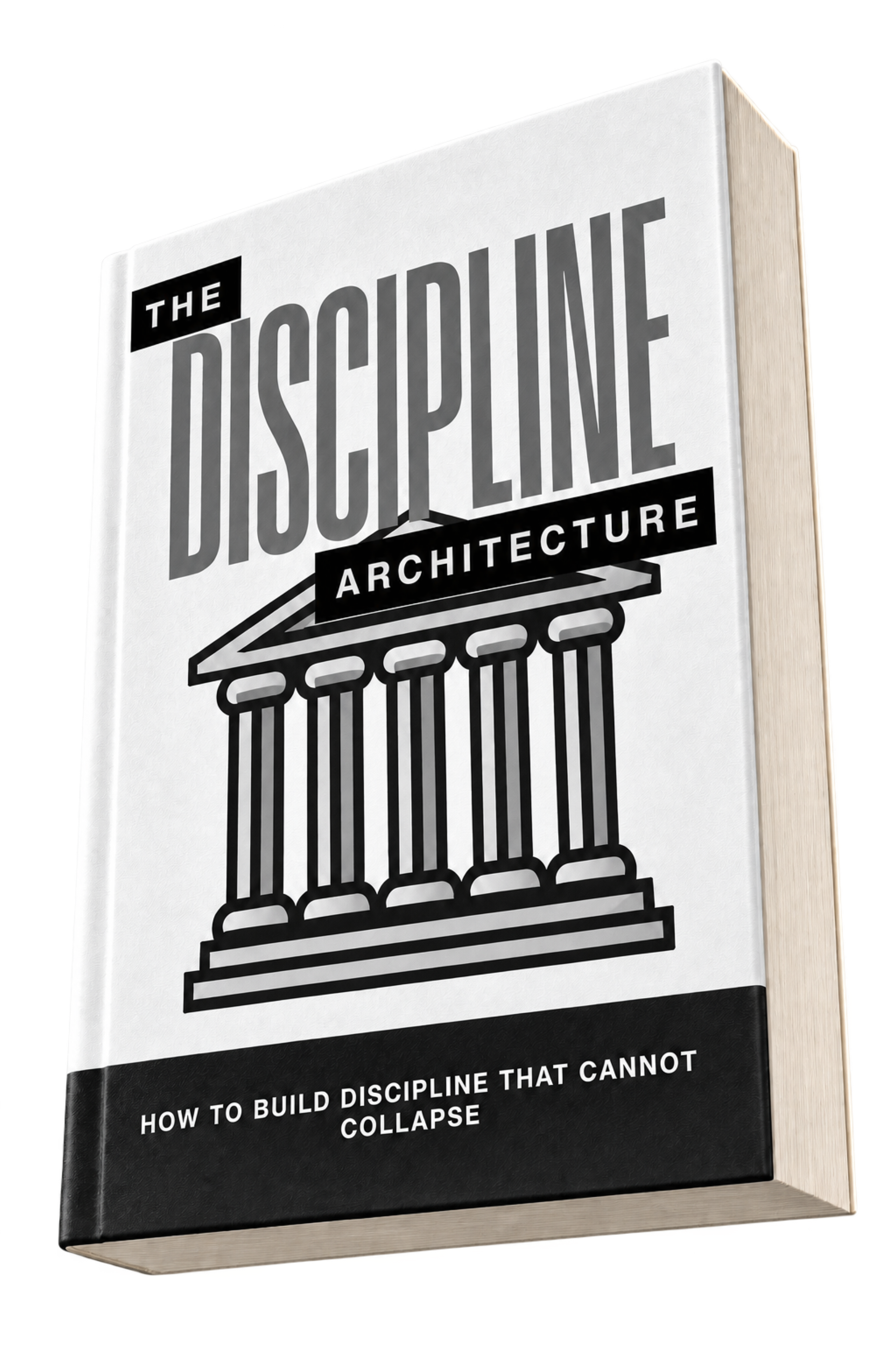
Your ambition is
not the problem.
The structure carrying it may be.
Burnout, inconsistency, and collapse are often treated as failures of effort. They are usually failures of design. More pressure cannot repair a weak foundation.
- Goals without integrity create unstable weight.
- Effort without direction wastes load-bearing energy.
- Intensity without patience produces cracks.
- Success without character cannot hold.
Weak foundations cannot support heavy ambition. Build the structure before adding more weight.
A pantheon
that holds.
Lay the foundations
Root your discipline in integrity, accountability, and patience.
Declare a clear vision
Give every sacrifice and daily action a defined direction.
Train inner control
Separate what you command from what you cannot control.
Develop the twelve pillars
Build courage, consistency, persistence, adaptability, character, grace, failure, mindfulness, curiosity, and mastery.
Distribute pressure
Create a structure that can carry difficult seasons without collapse.
Raise the roof
Connect daily discipline to purpose, identity, and legacy.
Discipline is
architecture.
Foundation
Integrity, accountability, and patience determine whether the rest can stand.
Pillars
Twelve disciplines turn values into daily load-bearing behavior.
Pressure
A durable structure bends, adapts, recovers, and keeps its direction.
Roof
Purpose and legacy give the entire structure a reason to hold.
For people building something
that must last.
Builders
Who want their inner life to match the weight of their goals.
Entrepreneurs
Who need durability under uncertainty and pressure.
Leaders
Who must carry responsibility without losing character.
Rebuilders
Who are ready to replace another collapse cycle with structure.
Build the structure before adding more weight.
What The Discipline Architecture teaches
The Discipline Architecture argues that discipline is the invisible structure beneath a durable life. Motivation can begin construction, but only values, standards, repeated action, and practiced recovery can keep the structure standing when pressure arrives.
Part 01The Ground and Foundations
The book begins below the visible structure. Integrity aligns action with truth, accountability removes escape routes, and patience accepts the time real construction requires. These foundations determine whether future success becomes stable or fragile.
Part 02The Twelve Pillars
Vision, control, courage, consistency, persistence, adaptability, character, grace, failure, mindfulness, curiosity, and mastery are presented as load-bearing disciplines. Each pillar supports a different demand of life, and the structure weakens when one is ignored.
Part 03Pressure, Failure, and Recovery
Pressure is not an interruption to the architecture; it is the test that reveals it. Failure becomes a forge, adaptability protects the mission when the method must change, and grace makes recovery possible without abandoning standards.
Part 04The Roof of Purpose
The final structure is held together by a highest aim: the identity, purpose, and legacy the reader chooses to serve. Discipline becomes more than task completion. It becomes the design through which a person carries responsibility and builds a life that can last.
About
the book.
What is The Discipline Architecture about?
It presents discipline as a structure: foundations of integrity, accountability, and patience; twelve practical pillars; and a roof of purpose and legacy.
How is it different from The Discipline Switch?
The Discipline Switch activates consistent action. The Discipline Architecture focuses on constructing the deeper principles that keep that action stable under pressure.
Is this a book of habits?
It includes practical action, but its focus is broader: character, standards, pressure, recovery, direction, and the internal design beneath habits.
Who should read it?
Builders, entrepreneurs, leaders, and anyone tired of creating progress that later collapses.

BUILD A LIFE THAT DOES NOT
CRACK UNDER PRESSURE.
Choose your edition and begin building the discipline this book was designed to develop.